.
Keeping this in consideration, how do you spell problem solving?
Correct spelling for the English word "problem solver" is [p?ˈ?bl?m sˈ?lv?], [p?ˈ?bl?m sˈ?lv?], [p_?_ˈ?_b_l_?_m s_ˈ?_l_v_?]] (IPA phonetic alphabet).
Additionally, how do you hyphenate time? When expressing time in words instead of numerals, you should use a hyphen, as in five-fifteen. But when a hyphen is necessary in the expression of minutes, only hyphenate the minutes, as in five forty-five.
Subsequently, question is, is decision making hyphenated?
Answer: You can use either decision making or decision-making in noun form, but decision-making is becoming more common. Everyone in the team had a role in the decision-making. Traditionally, we would hyphenate decision-making when the two words acted as a unit with an adjectival meaning, e.g. decision-making paper.
Why are some words hyphenated?
When you connect words with the hyphen, you make it clear to readers that the words work together as a unit of meaning. Generally, you need the hyphen only if the two words are functioning together as an adjective before the noun they're describing. If the noun comes first, leave the hyphen out.
Related Question AnswersWhat is problem solving in simple words?
problem solving. The process of working through details of a problem to reach a solution. Problem solving may include mathematical or systematic operations and can be a gauge of an individual's critical thinking skills.Is Problem Solving an adjective?
What is the adjective for "problem solving"? But problem solving is not adjective, as contrast to artistic.What do you call a problem solver?
1. problem solver - a thinker who focuses on the problem as stated and tries to synthesize information and knowledge to achieve a solution. convergent thinker, solver. thinker - someone who exercises the mind (usually in an effort to reach a decision)What are problem solving skills?
Problem solving requires two distinct types of mental skill, analytical and creative. Analytical or logical thinking includes skills such as ordering, comparing, contrasting, evaluating and selecting. Creative thinking is a divergent process, using the imagination to create a large range of ideas for solutions.Why is problem solving important?
Problem-solving is important both to individuals and organizations because it enables us to exert control over our environment. Problem-solving gives us a mechanism for identifying these things, figuring out why they are broken and determining a course of action to fix them.Is Problem Solving one word?
Many writers insert a hyphen in “decision making,” “problem solving,” and the like, though such treatment is justified only when the compound modifies a following noun (“decision-making apparatus,” “problem-solving skills”). However, similar noun+verb compounds, like eye-opener, are valid.What are the 7 steps to problem solving?
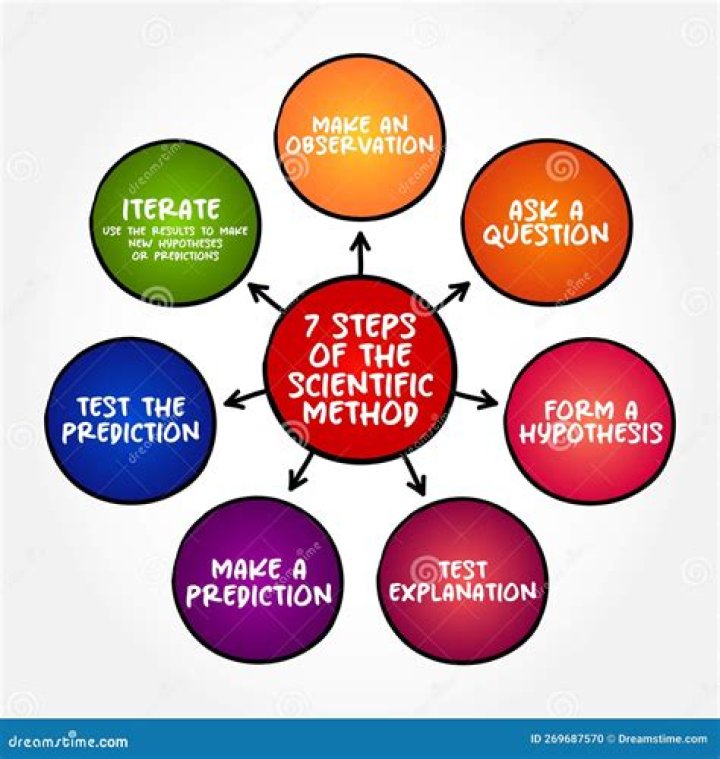
Here are seven-steps for an effective problem-solving process.- Identify the issues. Be clear about what the problem is.
- Understand everyone's interests.
- List the possible solutions (options)
- Evaluate the options.
- Select an option or options.
- Document the agreement(s).
- Agree on contingencies, monitoring, and evaluation.
Why is problem solving important in the workplace?
Effective problem solving skills enable employees to analyze problems, identify problem severity and assess the impact of alternative solutions. Workplace training designed to develop problem solving skills helps employees to work more efficiently with co-workers, customers, partners and suppliers.What are the 3 types of decision making?
There are many ways of classifying decision in an organization but the following types of decisions are important ones :- Tactical and Strategic Decisions.
- Programmed and Non-programmed Decisions.
- Basic and Routine Decisions.
- Organizational and Personal Decisions.
- Off-the-Cuff and Planned Decisions.
What is the best definition of decision making?
Decision making is a complex cognitive process often defined as choosing a particular course of action. Problem solving is part of decision making and is a systematic process that focuses on analyzing a difficult situation. Decision making can occur without the full analysis required in problem solving.What are examples of decision making?
Here are some examples of decision-making:- Active Listening.
- Interpersonal Skills.
- Collaboration.
- Communication.
- Logic.
- Problem Solving.
- Critical Thinking.
- Time Management.