.
Considering this, how did Saturnalia become Christmas?
Saturnalia was an ancient Roman festival in honour of the god Saturn, held on 17 December of the Julian calendar and later expanded with festivities through to 23 December. In particular, the historical western European Christmas custom of electing a "Lord of Misrule" may have its roots in Saturnalia celebrations.
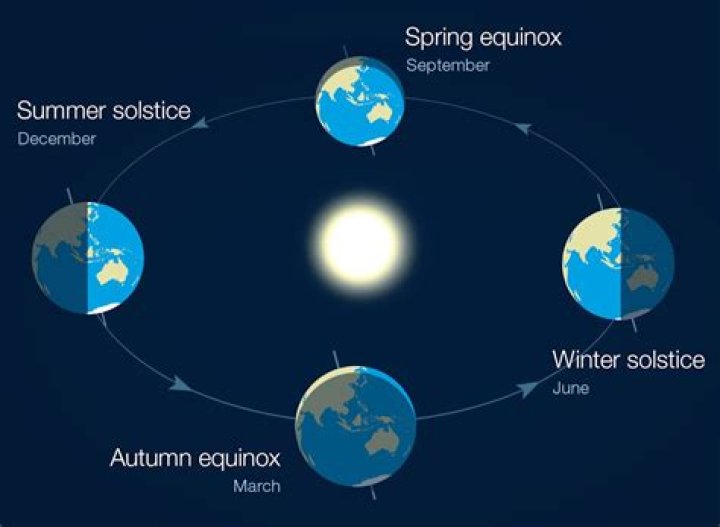
Furthermore, is Christmas related to Saturnalia? Saturnalia (detail) by Antoine Callet, 1783.It was a public holiday celebrated around December 25th in the family home. A time for feasting, goodwill, generosity to the poor, the exchange of gifts and the decoration of trees. But it wasn't Christmas. This was Saturnalia, the pagan Roman winter solstice festival.
Thereof, is Saturnalia still celebrated?
Saturnalia became Christmas. Where is Saturnalia celebrated? During the Roman period, Saturnalia was celebrated across the Roman Empire. Today, however, it is celebrated by reconstructionist pagans around the world.
Is Christmas a celebration of the winter solstice?
Christmas Celebrations In modern times Christians all over the world celebrate the birth of Jesus Christ on Christmas Day, which falls on December 25. Christmas is also referred to as Yule, which is derived from the Norse word jól, referring to the pre-Christian winter solstice festival.
Related Question AnswersIs Jesus Born on 25 December?
Although most Christians celebrate December 25 as the birthday of Jesus Christ, few in the first two Christian centuries claimed any knowledge of the exact day or year in which he was born.Is December 25 a pagan holiday?
The church only settled on a Dec. 25 Christmas in the fourth century. The standard explanation is that the early church conflated its celebration of the Nativity with pre-existing pagan festivals. Romans had their Saturnalia, the ancient winter festival, and northern European people had their own solstice traditions.Is Christmas religious?
Christmas (or Feast of the Nativity) is an annual festival commemorating the birth of Jesus Christ, observed primarily on December 25 as a religious and cultural celebration among billions of people around the world.What was Christmas originally called?
Christmas, Christian festival celebrating the birth of Jesus. The English term Christmas (“mass on Christ's day”) is of fairly recent origin. The earlier term Yule may have derived from the Germanic jōl or the Anglo-Saxon geōl, which referred to the feast of the winter solstice.Is Christmas Pagan?
Pagan, or non-Christian, traditions show up in this beloved winter holiday, a consequence of early church leaders melding Jesus' nativity celebration with pre-existing midwinter festivals. Since then, Christmas traditions have warped over time, arriving at their current state a little more than a century ago.When was Jesus actually born?
The earliest source stating 25 December as the date of birth of Jesus is likely a book by Hippolytus of Rome, written in the early 3rd century.When was Christmas banned in England?
1644,Is Saturnalia a pagan?
Saturnalia, held in mid-December, is an ancient Roman pagan festival honoring the agricultural god Saturn. Saturnalia celebrations are the source of many of the traditions we now associate with Christmas.What does Saturnalian mean?
noun, plural Sat·ur·na·li·a, Sat·ur·na·li·as. (sometimes used with a plural verb) the festival of Saturn, celebrated in December in ancient Rome as a time of unrestrained merrymaking.What is Saturn the god of?
Saturn (Latin: Sāturnus [saːˈt?rn?s]) was a god in ancient Roman religion, and a character in Roman mythology. He was described as a god of generation, dissolution, plenty, wealth, agriculture, periodic renewal and liberation.What is happy Yule?
Christmastide, Quarter days, Wheel of the Year, Winter festivals, Christmas. Yule or Yuletide ("Yule time" or "Yule season") is a festival historically observed by the Germanic peoples. Scholars have connected the original celebrations of Yule to the Wild Hunt, the god Odin, and the pagan Anglo-Saxon Mōdraniht.How did Pagans celebrate winter solstice?
Winter Solstice. The Pagan celebration of Winter Solstice (also known as Yule) is one of the oldest winter celebrations in the world. At mid-winter the Norsemen lit bonfires, told stories and drank sweet ale. The ancient Romans also held a festival to celebrate the rebirth of the year.How many days of Christmas are there from Christmas to Epiphany?
The 12 days of Christmas is the period that in Christian theology marks the span between the birth of Christ and the coming of the Magi, the three wise men. It begins on December 25 (Christmas) and runs through January 6 (the Epiphany, sometimes also called Three Kings' Day).What's the history of the Christmas tree?
Germany is credited with starting the Christmas tree tradition as we now know it in the 16th century when devout Christians brought decorated trees into their homes. It is a widely held belief that Martin Luther, the 16th-century Protestant reformer, first added lighted candles to a tree.What is Sol Invictus?
Sol Invictus ("Unconquered Sun") was the official sun god of the later Roman Empire and a patron of soldiers. On 25 December AD 274, the Roman emperor Aurelian made it an official cult alongside the traditional Roman cults.What did the Romans invent?
The Romans did not invent drainage, sewers, the alphabet or roads, but they did develop them. They did invent underfloor heating, concrete and the calendar that our modern calendar is based on. Concrete played an important part in Roman building, helping them construct structures like aqueducts that included arches.How is the Roman festival of Lupercalia celebrated?
Lupercalia was an ancient pagan festival held each year in Rome on February 15. Unlike Valentine's Day, however, Lupercalia was a bloody, violent and sexually-charged celebration awash with animal sacrifice, random matchmaking and coupling in the hopes of warding off evil spirits and infertility.When was the date of Christmas fixed?
Western Christians celebrate the Nativity on a fixed date, 25 December. Some Eastern Orthodox Christians celebrate it on 6 January together with Epiphany, the revelation of the infant Jesus to three wise men. The Greek and Russian Orthodox celebrate Christmas on 7 January and Epiphany on 19 January.What are the pagan festivals?
Together, they represent the most common celebrations in Wiccan-influenced forms of Neopaganism, especially in contemporary Witchcraft groups.- Winter Solstice (Yule)
- Imbolc (Candlemas)
- Spring Equinox (Ostara)
- Beltane (May Eve)
- Summer Solstice (Litha)
- Lughnasadh (Lammas)
- Autumn Equinox (Mabon)
- Samhain (Hallowe'en)